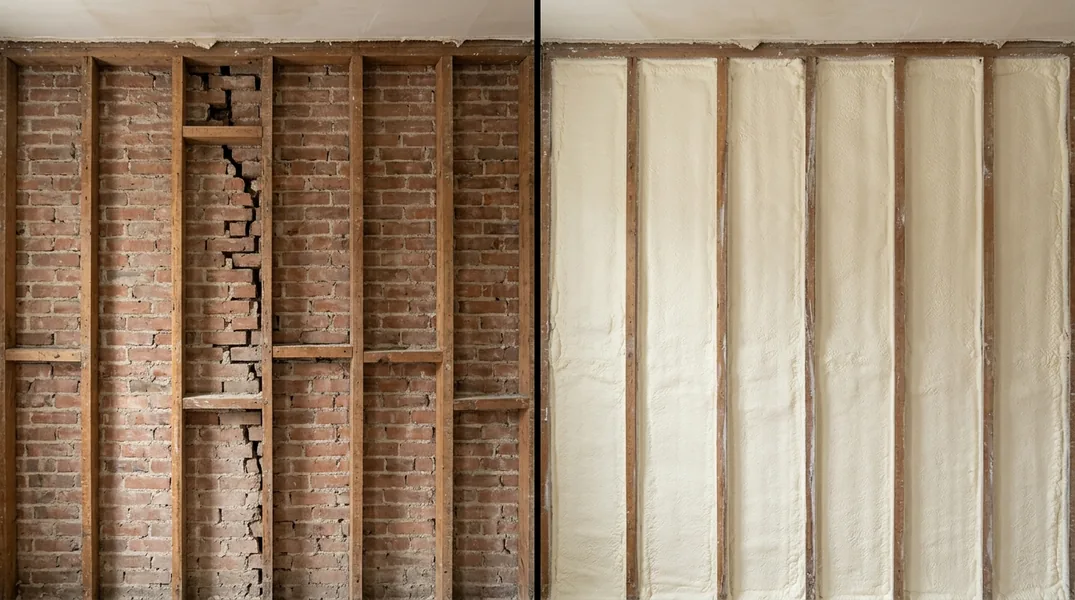
Understanding Spray Foam Attic Insulation Basics
When it comes to keeping your Albany home comfortable and energy efficient, few solutions rival the performance of Attic Spray Foam Insulation. Unlike traditional fiberglass batts or blown-in cellulose, spray foam expands to fill every crack, crevice, and cavity in your attic space, creating an airtight seal that stops heat loss in winter and heat gain in summer. This comprehensive coverage is why homeowners throughout the Capital Region are turning to spray foam as their insulation solution of choice.
The beauty of spray foam attic insulation lies in its versatility and performance. Whether you're dealing with an older home with irregular framing or a newer construction with complex roof lines, spray foam adapts to your specific needs. However, not all spray foam is created equal. The two primary types, open cell and closed cell, offer distinctly different characteristics that can significantly impact your home's comfort, durability, and long-term energy savings. Understanding these differences is essential before making an investment in your home's insulation.
Open Cell Spray Foam: The Breathable Option
Open Cell Spray Foam Insulation features a structure where the cells are not completely closed off from one another. This creates a softer, more flexible material that has a sponge-like consistency. The open nature of these cells allows air and moisture to pass through the foam, which is why it's often considered a breathable insulation option. For homeowners in Albany who are concerned about moisture management in their attics, this characteristic can be particularly valuable during seasonal transitions when humidity levels fluctuate.
The primary advantage of open cell foam is its lower cost compared to closed cell alternatives. It typically delivers an R-value of around 3.6 to 3.8 per inch, which is respectable for most residential applications. Open cell foam is also lighter in weight, making it easier to apply in overhead applications like attics. Additionally, because it allows some moisture vapor transmission, it can help prevent moisture buildup in spaces where ventilation is still occurring. However, open cell foam does have limitations in wet environments and offers less structural support than its closed cell counterpart. If your attic experiences any water intrusion issues, open cell foam may not be the ideal choice without proper moisture barriers in place.
Closed Cell Spray Foam: The High-Performance Choice
Closed Cell Spray Foam Insulation represents the premium option for attic insulation. In this formulation, the cells are completely closed and densely packed together, creating a rigid, foam-like material that offers superior performance characteristics. The closed cell structure provides an R-value of approximately 6.0 to 6.5 per inch, nearly double that of open cell foam. This means you need less thickness to achieve the same insulation value, which can be a significant advantage in attics with limited depth or height constraints.
Beyond superior R-value, closed cell foam creates a true vapor barrier when properly installed. This is particularly beneficial for creating what's known as sealed attic insulation, which prevents moisture and air infiltration completely. An unvented attic spray foam application using closed cell material can actually improve your home's structural integrity by preventing wood rot and mold growth. The rigidity of closed cell foam also adds structural strength to your roof assembly, which can be beneficial in areas prone to severe weather. The trade-off is that closed cell foam costs more upfront, but the superior performance and longevity often justify the investment for homeowners seeking maximum energy efficiency and protection.
Sealed Attic Insulation: Why Air Sealing Matters in Albany Homes
The concept of sealed attic insulation has become increasingly important for Albany homeowners seeking to maximize energy efficiency. Traditional attic insulation often leaves gaps and air leaks that allow conditioned air to escape, forcing your HVAC system to work harder and driving up energy costs. Spray foam, particularly when applied as an unvented attic spray foam system, eliminates these leaks by creating a continuous thermal envelope that fully encapsulates your attic space.
In the Capital Region's climate, where winters are cold and summers can be warm and humid, this air sealing capability is invaluable. When you eliminate air leaks, you're not just reducing energy waste, you're also improving indoor air quality by preventing unconditioned outside air from infiltrating your living spaces. You're also protecting your home from moisture-related problems that can develop when warm, moist indoor air meets cold attic surfaces. This is why many energy-conscious homeowners in the region are choosing spray foam over traditional insulation methods. The investment in a properly sealed attic typically pays for itself through energy savings within a reasonable timeframe.
Attic Spray Foam Insulation Cost in Albany: What to Budget
Understanding the financial investment required for attic spray foam insulation is crucial for homeowners making this decision. The pricing for spray foam insulation varies based on several factors, including the size of your attic, the type of foam selected, and the complexity of the installation. Open cell foam typically costs less per square foot, while closed cell foam commands a premium due to its superior performance characteristics. For a typical 1,500 to 2,000 square foot attic in Albany, you might expect to invest anywhere from $1,500 to $4,500 or more, depending on your choices and current market conditions.
While this may seem like a significant investment, it's important to consider the long-term value proposition. Homeowners often see their investment returned through reduced heating and cooling costs within five to ten years. Additionally, improved comfort, better moisture control, and enhanced structural integrity add value that extends beyond simple energy savings. To understand exactly what your project would cost and what benefits you could expect, we recommend reaching out for a free estimate from Albany Spray Foam Insulation. Our team can assess your specific situation and provide transparent pricing based on your home's unique needs.
Making Your Decision: Open Cell vs. Closed Cell for Your Albany Home
Choosing between open cell and closed cell spray foam ultimately depends on your specific priorities, budget, and home conditions. If you're primarily focused on achieving good insulation value at a lower cost and your attic has adequate ventilation, open cell foam may be sufficient for your needs. However, if you want maximum energy efficiency, superior moisture protection, and the benefits of a truly sealed attic system, closed cell foam is the better choice despite its higher initial cost.
Consider your home's age, current condition, and your long-term plans. Older homes in Albany often benefit significantly from the comprehensive air sealing that spray foam provides, as they typically have numerous air leaks that contribute to energy loss. If you're planning to stay in your home for many years, the investment in higher-performance closed cell foam is likely to deliver better returns. For homeowners who are unsure which option is right for them, the best approach is to consult with experienced professionals. Contact Albany Spray Foam Insulation at (838) 217-7813 or request a free estimate to discuss your specific situation with our knowledgeable team. We'll help you understand the pros and cons of each option and recommend the solution that best fits your home, budget, and goals.
Looking for a professional spray foam insulation contractor in Albany? Albany Spray Foam Insulation responds fast for all your spray foam insulation needs.
Get a Free Quote