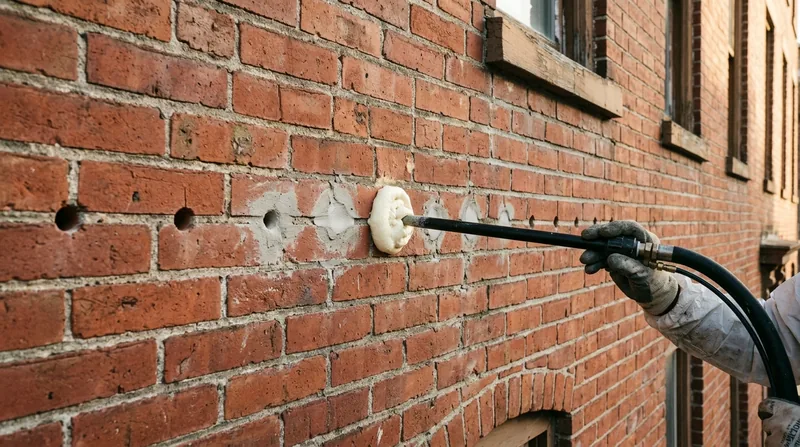




Wall & Injection Foam Insulation in Albany fills existing wall cavities without tearing out plaster or brick, a critical advantage for the city's nineteenth-century rowhouses and early-1900s frame homes. Albany's Center Square, Pine Hills, and neighborhoods along the Helderberg are built on shared party walls, many uninsulated since construction, that leak cold air and drive heating bills through the winter. Injection foam pressurizes into those cavities, sealing drafts through old brick and plaster without demolition. The Capital Region's cold, humid climate makes this retrofit one of the most cost-effective ways to reclaim comfort and cut energy waste in homes that were never designed with thermal barriers. We have been serving Albany, Troy, Schenectady, Colonie, and surrounding Rensselaer and Saratoga County communities since 2013, and we understand the specific challenge of insulating old masonry and frame walls in zone 5A winters.
Why Wall & Injection Foam Insulation Matters in Albany's Older Homes
Albany's residential stock is dominated by nineteenth-century brick rowhouses and early-1900s frame homes, many with uninsulated party walls and exterior brick walls that were never filled. Winter heating loss through these cavities is substantial, and the drafts are felt directly along the walls nearest the outside. Injection foam reaches into existing wall cavities without opening walls, creating an air barrier and thermal resistance where none existed. In a climate where winter heating dominates the utility bill and moisture-driven condensation is a chronic problem in old masonry, sealing the wall cavity is one of the highest-return retrofits available.
- We pressurize closed-cell or open-cell foam into existing wall cavities through small access holes, filling the space completely without plaster removal.
- Injection foam seals drafts through party walls and exterior brick, reducing the temperature gradient at the wall surface and eliminating cold spots.
- The air barrier created by injection foam reduces winter vapor drive into masonry and frame walls, lowering the risk of condensation and moisture damage.
- Unlike blown-in fiberglass, injection foam adheres to cavity surfaces and does not settle, maintaining R-value and air tightness over decades.
- The process is fast, non-invasive, and compatible with historic plaster finishes and original trim.
Injection foam insulation transforms the thermal performance of old walls without the cost and disruption of full demolition and reconstruction.
Key info: A rowhouse in Center Square with uninsulated party walls and exterior brick can lose 30 to 40 percent of its heating energy through those cavities. Injection foam seals both in a single retrofit, and the payback through reduced heating costs typically occurs within 5 to 8 years in Albany's climate.
For guidance on what your city requires before any wall work, consult the Albany Building Department or your local code official. New York State building codes govern thermal barriers and ignition barriers for foam, and the rules vary slightly between municipalities, so verification with your local authority is essential.
How Wall & Injection Foam Insulation Works in Albany Homes
Injection foam insulation begins with a site assessment to locate wall cavities, identify the best access points, and determine whether the wall is suitable for injection. We drill small holes (typically 1 to 1.5 inches) through plaster, drywall, or siding into the cavity space, then pressurize foam into the cavity using specialized injection equipment. The foam expands to fill the space, adheres to all surfaces, and cures within 24 to 48 hours. Once cured, we patch the access holes to match the existing finish. The entire process is controlled, non-invasive, and leaves no structural or cosmetic damage to the home.
- We perform a free inspection to confirm the cavity is dry, accessible, and suitable for injection foam.
- We drill small access holes at strategic points to ensure complete foam distribution throughout the wall cavity.
- We inject closed-cell or open-cell foam at a controlled ratio and temperature, monitoring pressure to avoid over-filling and wall damage.
- We maintain mechanical ventilation during cure and observe a 24 to 48 hour re-entry window before the space is occupied.
- We patch all access holes to match the original plaster, drywall, or exterior finish.
The entire retrofit is completed in one to two days, depending on cavity size and wall area, with minimal disruption to your home.
Example: A Colonie colonial with uninsulated exterior brick walls and party walls loses heat through three walls in winter. Injection foam fills all three cavities in a single day, creating a continuous air barrier without opening walls or removing plaster. The homeowner feels the difference immediately in room temperature consistency and comfort.
For more on how air sealing complements insulation, see our air sealing service page. If your walls require removal of failed or contaminated insulation first, we handle insulation removal before injection foam is installed.
Wall & Injection Foam Methods: Closed Cell vs. Open Cell
| Approach | Description | Best for |
|---|---|---|
| Closed Cell Injection Foam | High-density foam (R-6 to R-7 per inch) that hardens into a rigid air barrier and vapor barrier. Resists moisture intrusion and provides structural stiffness to the wall cavity. | Masonry walls, party walls, walls with prior moisture history, and cavities where vapor control is critical. Standard for Albany's old brick rowhouses. |
| Open Cell Injection Foam | Lower-density foam (R-3.5 to R-4 per inch) that cures into a softer, permeable material. Allows vapor transmission and is lighter on the wall structure. | Frame walls where vapor permeability is desired, sound dampening is a goal, or budget is constrained. Less common in Albany's masonry-heavy stock but useful for frame additions and secondary walls. |
| Injection into Existing Cavities | Foam is pumped into pre-existing wall cavities (party walls, brick cavities, frame wall bays) without demolition. Access holes are drilled and patched after cure. | All retrofit wall insulation in Albany. This is the method that preserves plaster, trim, and historic finishes while delivering full cavity fill. |
| Rim & Band Joist Injection | Injection foam seals the rim joist cavity (the band of wood between foundation and first floor framing) where cold air infiltration is severe in older basements. | Basements in Albany, Latham, Niskayuna, and surrounding towns where stone or brick foundations have open rim joists and ice-cold first-floor rooms. Often the single biggest source of winter heat loss. |
Closed cell is the standard for Albany's masonry walls because it provides vapor control and structural support. Open cell is chosen when budget is the primary constraint or when a frame wall needs sound dampening without vapor sealing. We recommend the method based on your wall type, moisture history, and thermal goals.
Wall & Injection Foam Insulation Cost in Albany: What to Expect
Wall and injection foam insulation in Albany typically starts at $2 per square foot of wall cavity, with the final cost determined by cavity size, foam type, access difficulty, and whether the wall contains existing insulation that must be removed first. A modest retrofit of 500 to 800 square feet of wall cavity (for example, two exterior walls and one party wall in a rowhouse) runs between $1,000 and $2,000 before any structural repairs or patching. Larger jobs, multi-story homes, or walls with difficult access can exceed that range. See our full pricing guide for more detail on factors that influence cost.
The cost-effectiveness of injection foam is highest in Albany's older homes because the alternative, full wall demolition and reconstruction with new insulation, is far more expensive and disruptive. Getting written estimates from two or three contractors with specific R-value and thickness specifications is the best way to compare prices fairly. Avoid any estimate that does not include those details or that promises a price before a site visit.
Travel within Albany and surrounding areas is included in our pricing. We provide free estimates within 24 hours of your call to (838) 217-7813, with no obligation to book.
What to Look for When Hiring a Spray Foam Insulation Contractor Near Me in Albany
Choosing the right contractor for wall and injection foam insulation is critical because poor installation, incorrect foam ratio, or inadequate ventilation during cure can result in odor, off-gassing, and performance failure. A reputable local contractor will provide a written estimate with R-value and thickness specifications, show proof of full insurance coverage, and explain the cure process and re-entry window clearly. Verify that any contractor you hire has experience with your specific wall type (masonry, frame, party walls) and can reference past work in Albany or nearby towns.
- Confirm the contractor is fully insured and can provide a certificate of insurance before work begins.
- Request a written estimate that specifies the R-value per inch, total thickness, and square footage of foam to be installed.
- Ask for references from recent jobs in Albany, Troy, or Schenectady, and contact at least two to discuss their experience.
- Verify that the contractor will maintain mechanical ventilation during cure and observe a 24 to 48 hour re-entry window before you re-occupy the space.
- Confirm that your local building department requires a permit for the work, and understand who is responsible for pulling it (many cities require the homeowner to verify with the building department).
- Understand the contractor's warranty on workmanship (typically one to three years) and any manufacturer system warranty that may apply.
A contractor who is transparent about credentials, process, and cost, and who defers to your local building department on permits and code compliance, is the one to hire. Contact us for a free estimate and we will walk you through every step of the process.
Wall & Injection Foam Insulation in Albany: Pricing Guide
| Service | Price | Details |
|---|---|---|
| Injection foam retrofit (wall cavities) | Starting at $2/sq ft | Closed or open cell foam injected into existing wall cavities, including access holes and patching to match finish |
| Rim joist and band joist injection | Starting at $3/sq ft | Closed cell foam seals basement rim joists and band joists, the highest-impact retrofit in older homes with stone foundations |
| Insulation removal before injection | From $1.50/sq ft | Removal and disposal of failed fiberglass, cellulose, or prior foam before new injection foam is installed |
| Multi-cavity or complex retrofit | On estimate | Homes with multiple wall types, difficult access, or prior moisture damage require on-site inspection before pricing |
| Travel and estimate | Included / Free | No mileage fee within Albany and surrounding service areas; free written estimate within 24 hours of your call |
Indicative pricing, the exact cost depends on square footage, finish, and site access. Free personalized estimate within 24h at (838) 217-7813.


