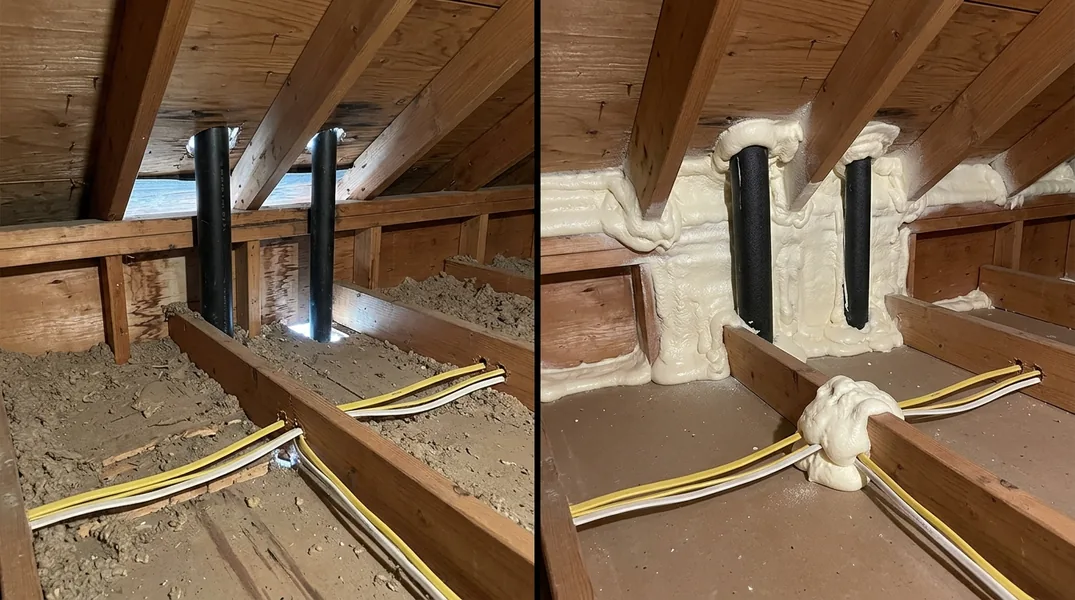
Understanding the R-Value Question for Albany Homes
When homeowners in Albany start researching attic insulation upgrades, one of the first questions that comes up is R-value. This number represents the thermal resistance of an insulation material, and it's crucial to understand what it means for your specific situation. The higher the R-value, the better the insulation performs at resisting heat flow, but the relationship between R-value and actual comfort or savings isn't always straightforward.
The spray foam insulation R value per inch varies significantly depending on the type of foam you choose. Open cell spray foam typically delivers between 3.5 and 3.8 R-value per inch, while closed cell spray foam provides a more impressive 6.0 to 7.0 R-value per inch. This means that closed cell foam achieves the same thermal resistance in roughly half the thickness, which matters when you're working with limited attic space or dealing with existing structural constraints. For homeowners weighing their options, understanding this difference is the foundation of making a smart investment.
R-Value Requirements by State: What New York Expects
New York has specific energy code requirements that dictate minimum insulation levels for residential attics. The R value requirements by state in New York typically call for R-38 to R-49 in attic spaces, depending on your specific climate zone within the state. Albany falls within a zone that generally requires R-38 as a baseline, though many energy-conscious homeowners and builders aim for R-49 or higher to maximize long-term savings and comfort.
Meeting these requirements with traditional fiberglass batts requires substantial thickness, typically 10 to 14 inches depending on the product quality. With Attic Spray Foam Insulation, you can achieve the same R-value in considerably less space. A 6-inch layer of closed cell foam delivers R-42, which exceeds New York's minimum requirement while taking up roughly half the space. This efficiency is why many Albany homeowners are making the switch from traditional insulation to spray foam solutions.
Air Sealing vs. Full Foam: The Real Difference
The decision between air sealing alone and investing in full spray foam insulation often comes down to your home's current condition and your long-term goals. Air sealing focuses on plugging gaps, cracks, and penetrations where conditioned air escapes and unconditioned air leaks in. This is absolutely necessary work that should happen regardless of your insulation choice. Many homes lose 20 to 30 percent of their heating and cooling energy through air leaks, so sealing these gaps is one of the most cost-effective improvements you can make.
However, air sealing addresses only part of the problem. Once you've sealed the air leaks, your insulation still needs to provide adequate thermal resistance. This is where the choice becomes clear: if your attic insulation is thin, degraded, or unevenly distributed, air sealing alone won't solve your comfort and efficiency issues. Closed Cell Spray Foam Insulation accomplishes both goals simultaneously. It seals air leaks while providing superior thermal resistance, creating a continuous thermal envelope that traditional insulation cannot match. For homeowners in Albany looking to maximize both comfort and energy savings, full foam installation often delivers better long-term value despite the higher upfront investment.
How Thick Should Spray Foam Be in Your Albany Attic?
The question of thickness depends on several factors, including your target R-value, the type of foam you select, and your attic's physical constraints. How thick should spray foam be is not a one-size-fits-all answer, but understanding the variables helps you make an informed decision. For most Albany homes aiming to meet or exceed state energy code requirements, a 5.5 to 7-inch layer of closed cell foam provides an excellent balance between performance and cost. This thickness delivers R-33 to R-42, which covers the majority of residential applications in our region.
Open cell foam requires greater thickness to achieve the same R-value, typically 10 to 12 inches to reach R-38 to R-42. While open cell foam costs less per board foot, the additional thickness needed can present challenges in attics with limited clearance or existing ductwork and mechanical systems. The best approach is to have a professional evaluate your specific attic during a free estimate consultation. They can assess your space, measure existing insulation, identify air leaks, and recommend the optimal thickness for your home's unique layout and your comfort goals.
Insulation Tax Credits and Rebates: Making Your Investment Affordable
One of the most overlooked aspects of attic insulation upgrades is the financial incentives available to homeowners. The insulation tax credit under the Inflation Reduction Act allows eligible homeowners to claim up to 30 percent of their insulation project costs as a federal tax credit, capped at $1,200 per year. This represents a significant reduction in your net investment and can make spray foam insulation much more affordable than it initially appears. To qualify, your home must be your primary residence, and the insulation must meet specific energy performance standards, which spray foam easily exceeds.
Beyond federal incentives, New York State and various utility companies offer insulation rebates that can further reduce your costs. Many utility providers in the Albany area provide rebates for attic insulation upgrades, particularly when combined with air sealing work. Some programs offer $300 to $800 rebates depending on the scope of your project. Before committing to any insulation work, contact your local utility company and review your eligibility for state and federal programs. When you combine these incentives with the long-term energy savings from improved insulation, the actual cost of upgrading becomes much more reasonable. We recommend discussing these opportunities during your initial consultation with Albany Spray Foam Insulation at (838) 217-7813.
Attic Spray Foam Insulation Cost in Albany: What to Budget
Understanding the pricing structure for spray foam insulation helps you plan your budget realistically. Closed cell spray foam typically costs between $1.50 and $2.50 per board foot installed, while open cell foam ranges from $0.70 to $1.50 per board foot. For a typical 1,000-square-foot attic requiring 6 inches of closed cell foam, homeowners should budget $3,000 to $5,000 before incentives. This upfront cost is higher than traditional fiberglass insulation, which might run $1,500 to $2,500 for the same space, but the performance difference justifies the investment for most homeowners.
The key to understanding whether spray foam represents good value is calculating your return on investment through energy savings. Most homeowners who upgrade to spray foam insulation see heating and cooling cost reductions of 15 to 20 percent, depending on their home's current condition and local energy rates. In Albany's climate, where heating costs are substantial, these savings accumulate quickly. When you factor in federal tax credits, state rebates, and reduced energy bills, many homeowners recoup their investment within 5 to 7 years. For specific pricing for your home, contact Albany Spray Foam Insulation directly. We provide detailed estimates that break down material costs, labor, and applicable incentives so you can make a fully informed decision.
Making Your Decision: Air Sealing, Foam, or Both?
The honest answer for most Albany homeowners is that both air sealing and insulation upgrades matter, and the question isn't really either/or. If your attic currently has minimal insulation and significant air leaks, you need both services to achieve meaningful improvements. Air sealing should always be part of your plan because it addresses energy waste that no amount of insulation alone can fix. However, if your goal is maximum comfort, efficiency, and long-term savings, spray foam insulation delivers superior results compared to traditional insulation paired with air sealing.
The best way to determine the right approach for your home is to schedule a professional evaluation. During a consultation, a technician can assess your current insulation condition, identify air leaks, measure your attic space, and provide a customized recommendation based on your specific needs and budget. Whether you ultimately choose Open Cell Spray Foam Insulation for cost efficiency or closed cell foam for maximum performance, you'll have the information needed to make a confident decision. Contact Albany Spray Foam Insulation today at (838) 217-7813 or request a free estimate to get started on improving your home's energy efficiency and comfort.
Looking for a professional spray foam insulation contractor in Albany? Albany Spray Foam Insulation responds fast for all your spray foam insulation needs.
Get a Free Quote